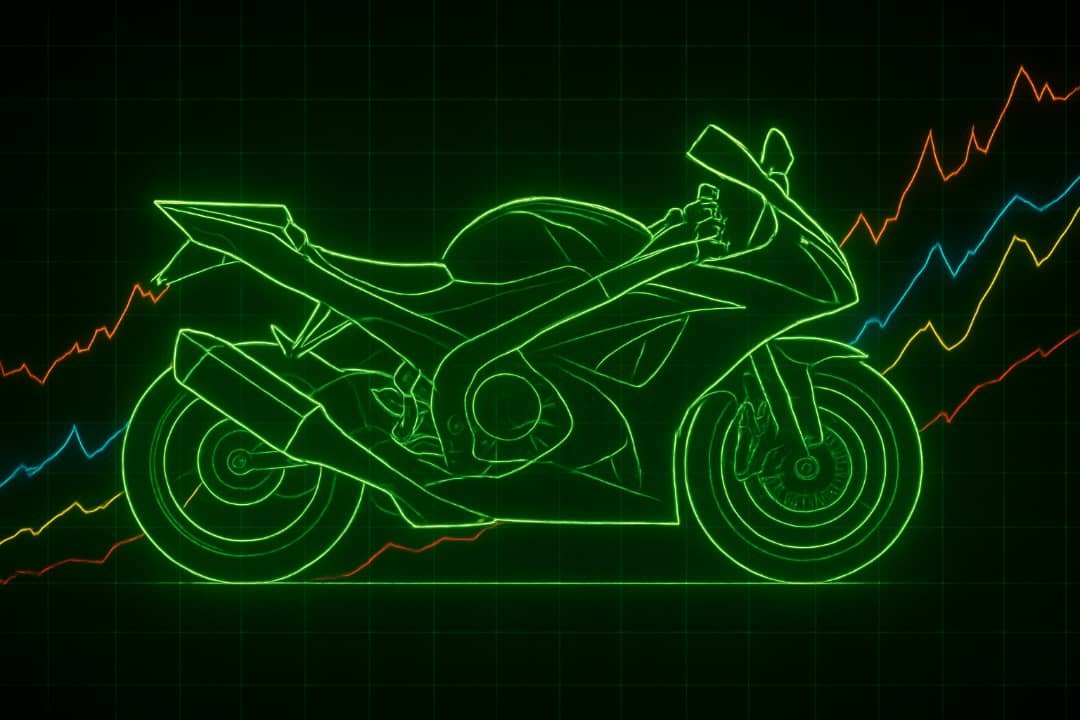
I started riding motorcycles in 2024. Like a lot of people, I had always wanted a superbike, and eventually I ended up with a second-hand Suzuki GSX-R1000 from 2003. The bike itself has a lot going on, but my actual riding journey is probably a story for another time.
What matters here is that once I started riding the bike every day—commuting to work, running errands, and just spending time on it—my curiosity slowly shifted. I wasn’t just riding anymore. I was constantly wondering how a machine like this actually works as a system.
Seeing a motorcycle as a system
When you sit on a superbike, you’re sitting on wide tires, a stiff aluminum frame, an inline-four engine making well over 120 horsepower, serious suspension, and an ECU-controlled fuel injection system. Somehow, all of this works together smoothly enough to be usable on normal roads.
At some point it clicked for me that superbikes aren’t just fast motorcycles—they’re complex engineering systems.
If you look at how these bikes have evolved, the difference is massive. Early-2000s superbikes and modern flagship models feel like they belong to different eras. Modern bikes rely heavily on electronics and software: ride-by-wire throttles, multiple riding modes, traction control, wheelie control, cornering ABS, and layers of logic constantly working in the background.
That shift toward electronics is what really caught my attention.
Inspiration from modern bikes and racing
A big inspiration for this project came from MotoGP. From a technical perspective, MotoGP bikes are rolling laboratories. They generate huge amounts of data—suspension movement, tire behavior, braking forces, lean angle, acceleration—and engineers use that data to refine setups and strategy session by session.
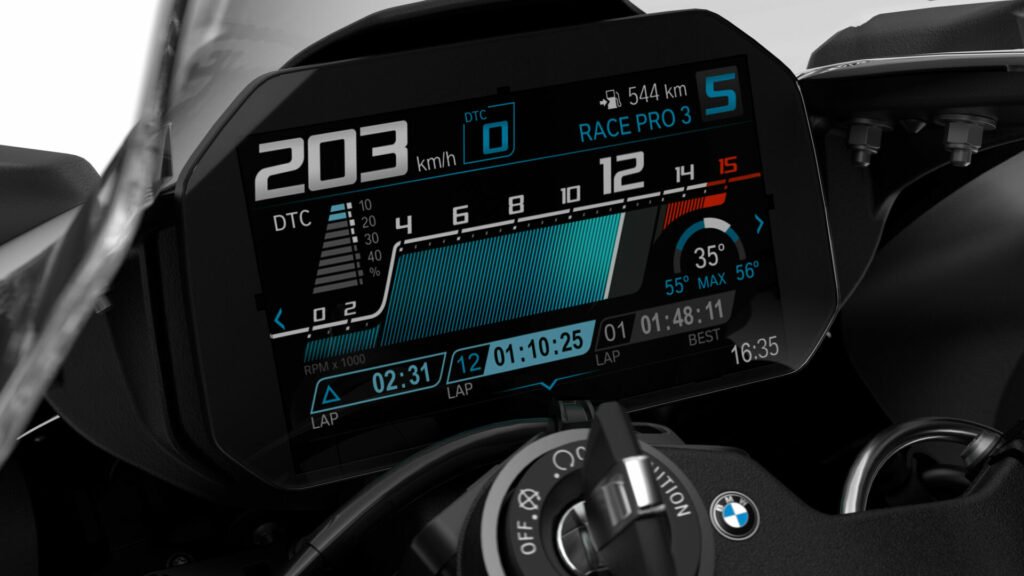
Around the same time, I was also looking at modern road bikes like the Yamaha R1M, which come with built-in data logging features. That idea stuck with me. I didn’t need race-level telemetry, but I kept wondering what it would be like to have some visibility into what my own bike was doing.
That’s when the idea formed:
What if I tried to log data on an old GSX-R that was never designed for it?
The questions I couldn’t answer while riding
I already had a rough intuition for a lot of things:
- Hard braking heats up the brake discs
- Tires warm up as you ride
- The front suspension compresses under braking
- Different rider inputs interact with each other
But intuition isn’t the same as measurement.
I couldn’t actually see any of this happening. I couldn’t measure it. Everything was based on feel and assumptions.
What really happens to brake disc temperature during a hard stop?
How quickly do tires warm up on a normal commute?
How does suspension behavior change under real road conditions?
Those questions kept coming back, and eventually curiosity won.
Turning curiosity into a data logging experiment
I didn’t start with a polished design or a clear end goal. I started by writing down what I was curious about and what I wanted to observe:
- Front and rear suspension behavior
- Front and rear tire temperature
- Front and rear brake disc temperature
- Spatial data using IMU sensors (lean and movement)
- Engine coolant temperature
- Brake input states
- Headlight state for logic and triggers
- GPS location data
At one point I even considered reading throttle position, but I dropped that idea quickly. I was already getting overwhelmed, and I had to remind myself what this project actually was.
This wasn’t about building a product or doing anything “proper.”
It was a hobbyist experiment to see if something like this was possible—and how hard it would be in practice.
I expected things to break, and I was fine with that. Learning was the whole point.
The first reality check
What surprised me wasn’t that the project was difficult—I expected that.
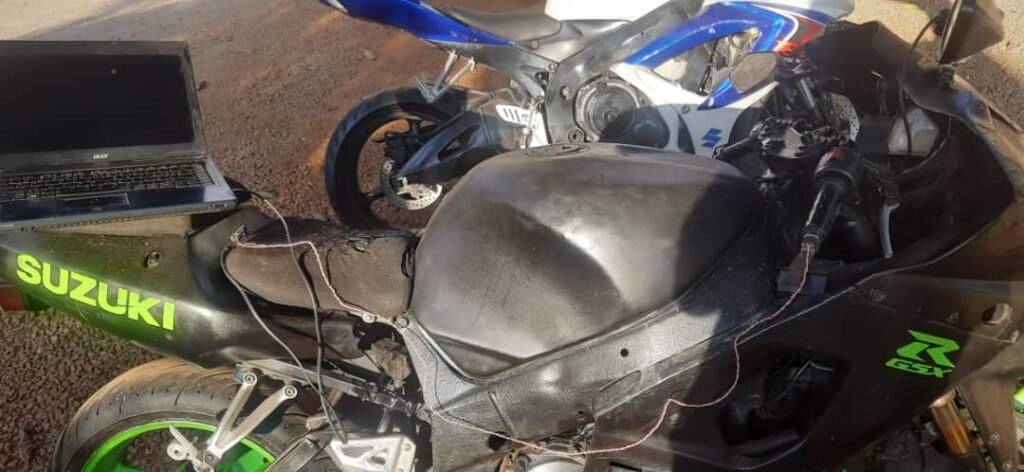
What surprised me was how quickly simple ideas turned into complex problems. Sensors that worked perfectly on the bench behaved very differently once they were mounted on a vibrating, hot motorcycle. Mounting, wiring, noise, and real-world conditions mattered far more than I initially thought.
That was the first real lesson of this project.